
Ever stood at a trailhead wondering if you picked the right park? You are not alone. There are 63 national parks in the United States, and every one claims “epic views.” Some do. Others suit a scenic drive better than a real hike.
This guide gives you a trail-tested answer, whether you are lacing up your first boots or planning a multi-day alpine trek. We looked at trail mileage, permits, elevation gain, and crowd levels. We also weighed on-the-ground experience from 2025 and 2026.
New to planning? Start with our guide to the best national parks to visit in the USA, then come back here for trail details.
TL;DR
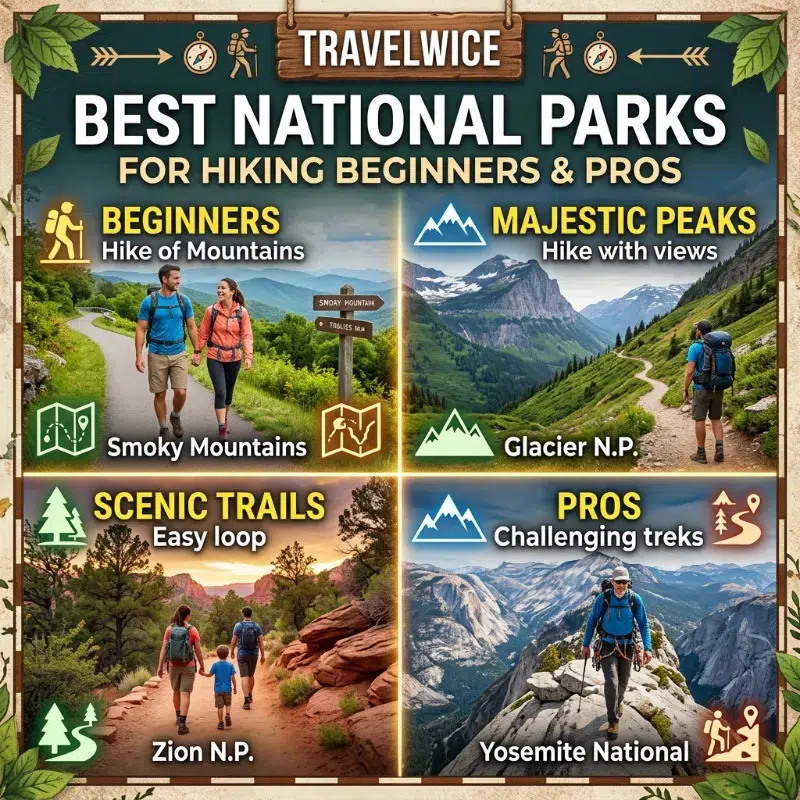
- Zion, Rocky Mountain, Great Smoky Mountains, Grand Teton, Glacier, Yosemite, Acadia, and Olympic offer easy, moderate, and hard trails in one place.
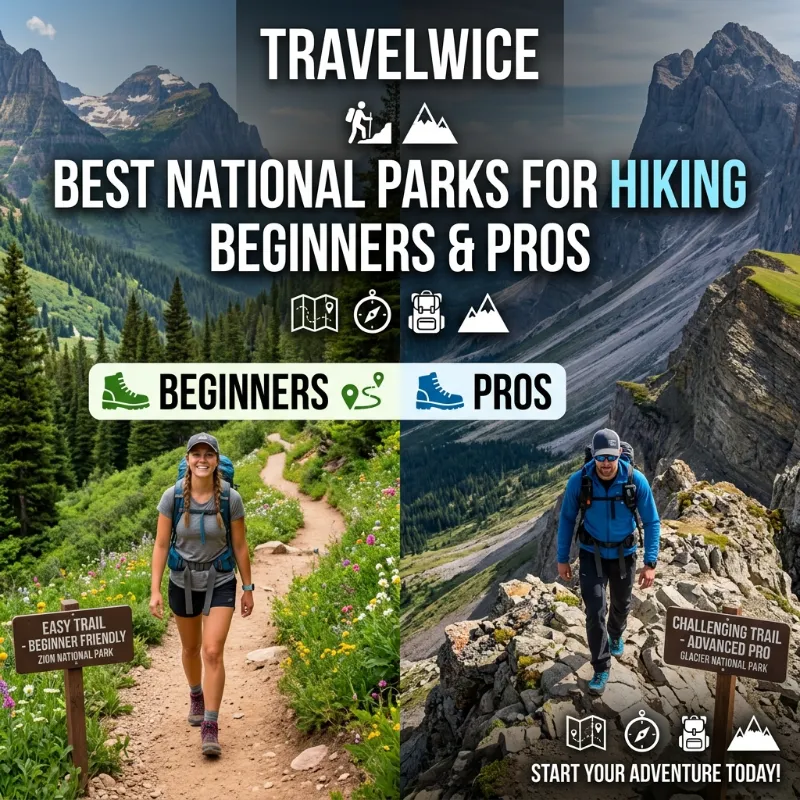
- Beginners should start with short, marked routes like Zion Canyon Overlook, Sprague Lake, or the Gatlinburg Trail.
- Save permit hikes like Angels Landing and Half Dome for later.
- Fees and permit rules changed in 2026, so check current prices before you go.
Key Takeaways
| Category | What To Know |
|---|---|
| Best overall variety | Zion, Rocky Mountain, and Glacier |
| Best for absolute beginners | Great Smoky Mountains and Acadia |
| Best for advanced hikers | Yosemite, Grand Teton, and North Cascades |
| Peak hiking season | June through September |
| 2026 non-resident surcharge | Up to $100 per person at 11 popular parks |
| Trail mileage in a large park | 400 to 800+ miles |
Why Hiking National Parks Is Booming
Trail traffic has climbed for years, and 2025 was no exception. Great Smoky Mountains welcomed over 11 million visitors, making it the most visited park in the country. It sits less than an hour from Knoxville and a few miles from Gatlinburg. Families, day-trippers, and serious hikers all funnel through the same gateway towns.
This surge means two things for you. First, popular parks are busier, so early starts and shoulder seasons matter more. Second, park services are adapting quickly. Many trails now use permits, timed entry, or lotteries, so planning ahead is now part of the trip.
National Parks to Visit Fall 2026: The 10 Best for Color, Calm and Wildlife
What Makes a National Park Great for Hiking
Beauty alone does not earn a spot on this list. Four factors separate a good hiking park from a great one:
- Trail variety. Paved walks and strenuous backcountry routes, so nobody gets left out.
- Reliable access. Roads, shuttles, and parking that work in peak season.
- Clear difficulty ratings. Marked easy, moderate, and hard trails help first-timers.
- Manageable permits. If every good trail needs a lottery win, planning gets frustrating.
Crowds matter too. A gorgeous trail can ruin your day if the lot is full by 8 a.m. That is why many parks now use shuttles and timed entry. Check a park’s entry rules on nps.gov before you go.
Zion National Park, Utah
Zion packs over 90 miles of trails into a compact, dramatic canyon. Options range from a paved riverside stroll to a wade through The Narrows.
Spring and fall are the sweet spots. April, May, September, and October avoid the brutal summer heat. They also miss the winter snow on higher trails. With one day, start with the Zion Canyon Overlook Trail. Then try Observation Point if your legs are ready.
Angels Landing now requires a permit from a seasonal lottery. You can no longer just show up and climb the chains. Book through Recreation.gov and plan early. Heading to other desert parks? Our guide to the best national parks in Utah covers Bryce Canyon and Arches.
Rocky Mountain National Park, Colorado
Rocky Mountain offers 350-plus miles of trails. Alpine lakes, waterfalls, and snowy peaks sit a short drive from Denver. That makes it an easy weekend trip for beginners. Longs Peak is a real challenge for experienced climbers.
July through September gives the fullest trail access. A timed-entry reservation is typically required from late May to mid-October. Book it before you buy new boots.
- Easy: Sprague Lake, a flat, family-friendly loop.
- Moderate: Emerald Lake, a steady climb past three lakes.
- Hard: Longs Peak, 13.3 miles with about 4,934 feet of gain.
More high-country ideas are in our guide to the best national parks in Colorado.
Great Smoky Mountains National Park, Tennessee and North Carolina
Great Smoky proves that popular parks can still have great hiking. Its 800-plus miles of trails include waterfall walks and multi-day ridgeline loops.
The nearly 4-mile Gatlinburg Trail starts at Sugarlands Visitor Center and gains only about 200 feet. It is one of the best easy hikes in the country for a first outing. Add a detour to Cataract Falls for a satisfying half day.
One quirk to know: the park has no entrance fee, but parking requires a $5 per vehicle daily permit. The America the Beautiful pass does not cover it.
Least Crowded National Parks in the USA Right Now
Grand Teton National Park, Wyoming
Grand Teton pairs mountain scenery with roughly 250 miles of trails. Many visitors pair it with Yellowstone, but it deserves its own hiking days.
June through September offers the fullest access. May works as a quieter shoulder season. Beginners should try the Taggart Lake Loop. Experienced hikers can build toward Delta Lake or the Inspiration Point and Hidden Falls combo.
Glacier National Park, Montana
Glacier is one of the best parks for experienced hikers. Its 700-plus miles of trail include committing terrain and glacier-carved valleys. You also have a real chance of spotting grizzly bears. Bear spray is essential gear here, not an accessory.
Going-to-the-Sun Road typically opens between June and October, depending on snowpack. Plan for July through September. The Highline Trail is regularly named among the most rewarding hikes in the park system. Check trail status on the Glacier NPS page before you head out.
Yosemite National Park, California
Granite walls and roaring waterfalls make Yosemite an icon. With over 800 miles of trails, it belongs in any serious hiking guide.
Spring and early summer bring the waterfalls to full strength. Summer and early fall open the high country. Half Dome is the famous hard hike, a 16.5-mile round trip with about 5,305 feet of gain. It requires a lottery permit. For an easy start, try the flat Mirror Lake Loop.
Planning a longer trip? Our guide to the best national parks in California pairs Yosemite with Sequoia and Kings Canyon.
Acadia National Park, Maine
You do not need towering mountains for world-class hiking. Acadia’s 158 miles of trails cross granite peaks, coastal cliffs, and forest paths. Many end with an ocean view.
Summer and fall are best, and October brings vivid foliage. The 3.3-mile Jordan Pond Path suits beginners. The Precipice Loop uses iron rungs bolted into the cliff. It thrills experienced hikers who can handle exposure.
Olympic National Park, Washington
Olympic is arguably the most diverse park here. You can hike mossy rainforest, rugged coastline, and alpine meadows within one boundary. More than 600 miles of trails connect them.
Summer opens the mountains. May and October suit the rainforest and coast, with thinner crowds. Marymere Falls is a great easy hike. Mount Storm King is short but tough, with sweeping lake views.
Bryce Canyon National Park, Utah
Bryce Canyon has the highest concentration of hoodoos on earth, packed into about 60 miles of trail. Snow lingers here because of the elevation. May and September offer the best balance.
The Rim Trail is easy and mostly flat. The Navajo and Queens Garden Loop drops you among the hoodoos. The Peekaboo Loop adds enough elevation change for a real workout.
Best National Parks for Hiking Beginners and Pros
Sequoia and Kings Canyon National Parks, California
These neighboring parks are managed together and offer more than 800 miles of combined trail. Beyond the giant sequoias, you will find alpine lakes, granite domes, and one of North America’s deepest canyons.
June through September gives the best access. May and October bring smaller crowds if you accept limited trails. The Congress Trail is an easy, paved loop past enormous trees. The multi-day Rae Lakes Loop is a serious backpacking goal. See the Sequoia and Kings Canyon NPS page for current conditions.
Best Day Hikes for Experienced Hikers
Ready for a real test? These day hikes use real distance and elevation data.
- Half Dome, Yosemite (16.5 miles, 5,305 ft): permit required, and cables assist the final pitch.
- Longs Peak, Rocky Mountain (13.3 miles, 4,934 ft): start before dawn to beat afternoon storms.
- Highline Trail, Glacier: carry bear spray and check trail status daily.
- The Subway, Zion: permit required, through sculpted sandstone.
- South Kaibab, Grand Canyon (about 12 to 17 miles): the National Park Service discourages rim-to-river-to-rim in one summer day.
None of these are casual strolls. Each demands proper footwear, real food and water, and a turnaround plan. For more ideas, see the most epic hikes in the national parks.
Easy Hikes: Where Beginners Should Start
New hikers often pick a trail based on a stunning photo. They skip the difficulty rating and end up exhausted a mile from the trailhead. Look for an early payoff and forgiving terrain instead.
- Zion Canyon Overlook (Zion): big canyon views for minimal effort.
- Sprague Lake (Rocky Mountain): flat, wide, and stroller-friendly.
- Gatlinburg Trail (Great Smoky): nearly 4 miles round trip, about 200 feet of gain.
- Jordan Pond Path (Acadia): water views and boardwalk that are easy on the knees.
- Lower Yosemite Falls Trail (Yosemite): a short, mostly flat loop with a dramatic waterfall.
Treat your first outing as practice for logistics, not just fitness. Learn to read a trailhead sign. Download offline maps before you lose signal. Tell someone your route and return time. You can browse more routes on AllTrails and Great American Hikes.
What to Pack and How to Stay Safe
Before any hike, pack the ten essentials.
| Essential | Why It Matters |
|---|---|
| Water (0.5 liter per hour) | Dehydration is the top reason hikers turn back or need rescue |
| Food or snacks | Blood sugar drops fast on steep climbs |
| Layers | Mountain weather can swing 20 to 30°F in an afternoon |
| Map and offline navigation | Cell service vanishes in canyons and forests |
| Sun protection | Altitude makes sun exposure much stronger |
| First aid basics | Blisters and scrapes are common |
| Light source | Even short hikes can run long |
| Fire starter | For emergencies, not day-hike campfires |
| Emergency shelter | Weighs almost nothing and can save a life |
| Multi-tool or knife | For gear repairs and emergencies |
Always check the forecast before you leave. Afternoon thunderstorms are common at altitude, and flash floods are a real risk in desert canyons during monsoon season. Stay on marked trails, never feed wildlife, and pack out what you bring in. These Leave No Trace principles are why the trails still look incredible decades later.
2026 Entrance Fees and Permit Changes
Planning a 2026 trip? Pay close attention here. The fee structure changed on January 1, 2026.
New Non-Resident Fees
The America the Beautiful annual pass remains $80 for US citizens and residents. Non-residents now pay $250 for the same pass, up from $80. A government-issued photo ID is now required for every visitor over 16 to confirm residency.
Free entrance days are now limited to US citizens and residents. If you are traveling from the UK or Europe, this changes the math on multi-park road trips. Budget for it before you book flights.
Parks With the $100 Surcharge
On top of that, eleven popular parks charge non-residents an extra $100 per person. This applies to visitors without the annual pass and comes on top of the standard entrance fee. The parks are Acadia, Bryce Canyon, Everglades, Glacier, Grand Canyon, Grand Teton, Rocky Mountain, Sequoia and Kings Canyon, Yellowstone, Yosemite, and Zion.
Standard entry passes still range from about $10 to $35 depending on the park. Confirm current prices on the NPS fees and passes page. For background, see Backpacker’s fee coverage and Wanderlust’s overview.
Five Mistakes First-Time Park Hikers Make
Trailhead parking lots often fill before sunrise. After years of watching, a few patterns show up among first-time visitors.
- Underestimating altitude. Many parks sit above 7,000 feet. Even fit hikers feel winded until they acclimatize. Go slow and drink extra water.
- Starting too late. Popular trailheads like Angels Landing and South Kaibab often fill by 7 or 8 a.m. in peak season. Afternoon heat or storms can then turn a pleasant hike into a hazard.
- Ignoring shuttles and timed entry. Zion, Rocky Mountain, and Acadia all use them in peak months. Skipping the check can cost you hours.
- Skipping the weather check. A clear morning in Grand Teton or Glacier can turn to hail by early afternoon.
- Overestimating fitness. Half Dome and Longs Peak are not the place to test yourself for the first time.
Check the park’s alerts page on nps.gov the night before. It solves nearly all of these problems.
Free National Parks in USA: Your 2026 Guide to Parks With No Entrance Fee
Seasonal Planning: When and Where to Hike
Timing matters as much as the park you choose. Rocky Mountain, Glacier, and Grand Teton are fully open only from roughly June through September. Desert parks like Zion and Big Bend are miserable in summer heat and far better in spring or fall.
- Building a spring trip? See the best national parks to visit in spring.
- Want foliage with your hiking? Read the best national parks to visit in fall.
- Worried about crowds? Check our list of the least crowded national parks in the USA.
Comparing the Top Parks at a Glance
| Park | Trail Miles | Best Season | Beginner Hike | Advanced Hike |
|---|---|---|---|---|
| Zion, UT | 90+ | Spring, fall | Zion Canyon Overlook | The Subway (permit) |
| Rocky Mountain, CO | 350+ | July to Sept | Sprague Lake | Longs Peak |
| Great Smoky, TN/NC | 800+ | Spring, fall | Gatlinburg Trail | Mount Le Conte via Alum Cave |
| Grand Teton, WY | 250+ | June to Sept | Taggart Lake Loop | Delta Lake |
| Glacier, MT | 700+ | July to Sept | Running Eagle Falls | Highline Trail |
| Yosemite, CA | 800+ | Spring, early summer | Mirror Lake Loop | Half Dome (permit) |
| Acadia, ME | 158 | Summer, fall | Jordan Pond Path | Precipice Loop |
| Olympic, WA | 600+ | Summer (high country) | Marymere Falls | Mount Storm King |
Frequently Asked Questions
What are the best national parks for hiking beginners?
Great Smoky Mountains, Acadia, and Rocky Mountain offer well-marked, low-elevation trails with an early scenic payoff.
Do I need a permit to hike in national parks?
Most trails do not. A few famous routes do, including Angels Landing, Half Dome, and The Subway. Lottery windows vary, so check the park’s official site and Recreation.gov before you travel.
What is the best time of year to hike?
For high-elevation parks, June through September gives the fullest access. Desert parks like Zion and Arches are better in spring and fall.
How much does it cost to enter a national park in 2026?
Standard passes run roughly $10 to $35 per vehicle. The annual pass costs $80 for US residents and $250 for non-residents. Eleven popular parks add a $100 per-person non-resident surcharge.
What should I pack for a day hike?
Water, food, layers, sun protection, offline navigation, first aid, and a light source. Add extra water and electrolytes for desert or high-altitude trails.
Are park trails suitable for kids or older hikers?
Yes. Sprague Lake, the Gatlinburg Trail, and Jordan Pond Path are flat or gently graded. They work well for kids, grandparents, or anyone easing back into hiking.
Which park is best for a first-ever hiking trip?
Great Smoky Mountains. It has easy trails, no entrance fee, and routes of every length. Acadia is a close second if you prefer a coastal setting.
Quick Knowledge Check
- Which park on this list has the most trail miles? A) Acadia B) Great Smoky Mountains C) Bryce Canyon
- Which hikes require a permit? (select all) A) Half Dome B) Sprague Lake C) Angels Landing D) The Subway
- When is the best season for high-altitude parks? A) December to February B) June to September C) March to April
- Which 2026 fee changes are true? (select all) A) Non-resident annual pass is $250 B) Eleven parks charge a $100 surcharge C) Resident pass dropped to $50 D) Photo ID is required for visitors over 16
- Which belong in the ten essentials? (select all) A) Water and food B) Offline navigation C) A beach umbrella D) Sun protection and first aid
Answers: 1. B, 2. A, C, D, 3. B, 4. A, B, D, 5. A, B, D
Conclusion
Choosing among the best national parks for hiking comes down to trail variety, honest difficulty ratings, and realistic timing. Whether you want a gentle lakeside walk or a permit-only granite scramble, these parks deliver. Start with a trail that matches your fitness. Respect permits and seasonal closures, then build from there. The mountains, canyons, and coastlines will wait.
References: NPS Fees and Passes · Backpacker · Wanderlust · Lost with Lydia · Paul in the Parks · Great American Hikes · Islands.com · AllTrails