
If you have ever stood in a parking lot at Zion or Yosemite at nine in the morning, inching forward behind fifty other cars, you already know why so many travelers are searching for the least crowded national parks in the USA right now. The good news is that quiet, wide open, genuinely peaceful parks still exist, and many of them are just as beautiful as the famous names everyone lines up for. I have spent years chasing shoulder seasons and back roads across the park system, and the parks below are the ones I actually recommend to friends who want solitude, not a selfie line.
This guide walks through the quietest national parks to visit, when to go, what to expect, and how to plan around the crowds without sacrificing scenery. Along the way you will find real visitor numbers, practical tips, and a few underrated national parks for 2026 that most articles skip entirely.
Key Takeaways
| Park | Region | Approx. Annual Visitors | Best Season to Visit |
|---|---|---|---|
| Gates of the Arctic, Alaska | Far North | Under 15,000 | June to early September |
| North Cascades, Washington | Pacific Northwest | Around 30,000 | Late June to September |
| Isle Royale, Michigan | Great Lakes | Around 25,000 | June to September |
| Great Basin, Nevada | Desert Southwest | Around 140,000 | May, September, October |
| Congaree, South Carolina | Southeast | Around 150,000 | October to April |
| Guadalupe Mountains, Texas | Desert Southwest | Around 200,000 | October to early December |
| Dry Tortugas, Florida | Southeast Coast | Around 80,000 | December to April |
| Black Canyon of the Gunnison, Colorado | Rocky Mountains | Around 300,000 | May, September |
| Voyageurs, Minnesota | Great Lakes | Around 240,000 | Winter and shoulder months |
| Wind Cave, South Dakota | Great Plains | Around 600,000 | Early spring, late fall |
Figures are approximate averages based on recent National Park Service reporting and can shift year to year, so it is always worth checking NPS visitor use statistics before you finalize a trip.
TL;DR
- Gates of the Arctic, Isle Royale, and North Cascades sit at the very bottom of the visitor list, often under 30,000 guests a year, compared to millions at parks like Zion.
- Shoulder season, meaning late spring and early fall, is consistently the smartest window to dodge summer traffic almost everywhere on this list.
- Pairing a quiet park with a popular one nearby, such as Black Canyon near the Colorado crowds or Congaree outside a Southeast road trip, gives you the best of both without extra flights.
Why Crowds Have Gotten So Much Worse at Popular Parks
National park visitation has climbed steadily since 2015, and it jumped again after 2021 as more people discovered outdoor travel. However, that surge has not been spread evenly. A handful of parks, think Great Smoky Mountains, Zion, and Grand Canyon, absorb a huge share of total visits, while dozens of equally stunning parks sit nearly empty most of the year.
National Parks to Visit Fall 2026: The 10 Best for Color, Calm and Wildlife

That imbalance is actually good news for anyone planning around it. Because so much attention flows toward the same ten or twelve destinations, the quietest national parks to visit are often just a few hours away from the popular ones, not hidden on the far side of the country. For example, Black Canyon of the Gunnison sits roughly three hours from Rocky Mountain National Park, yet it receives a small fraction of the visitors.
If you are building out a wider itinerary, our guide to national parks to visit in the USA is a good starting point before narrowing down to the quiet options below.
The Least Crowded National Parks in the USA Right Now
1. Gates of the Arctic National Park, Alaska
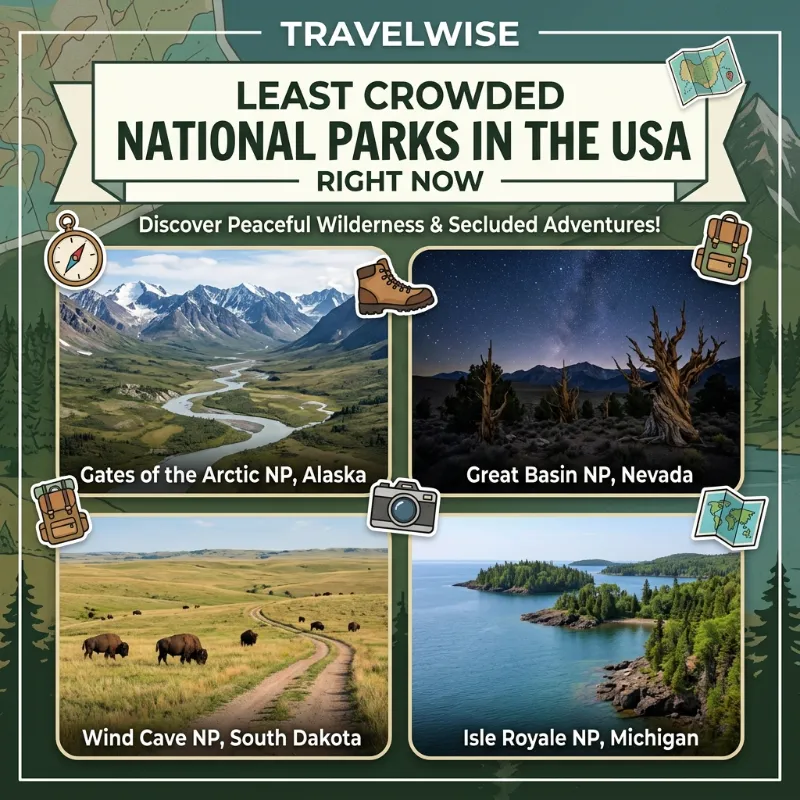
This is genuinely one of the loneliest places in the entire park system, and that is the point. There are no roads leading into Gates of the Arctic, no marked trails, and no visitor centers inside the park itself. Most travelers arrive by small bush plane out of Fairbanks or Bettles, then hike or paddle on their own terms.
Visitor numbers here typically stay under 15,000 a year, according to NPS reporting, which is a rounding error compared to the millions who pass through parks like Great Smoky Mountains. If true solitude is the goal, this is as close as the country gets. Go between June and early September, since the rest of the year brings extreme cold and very limited access.
2. North Cascades National Park, Washington
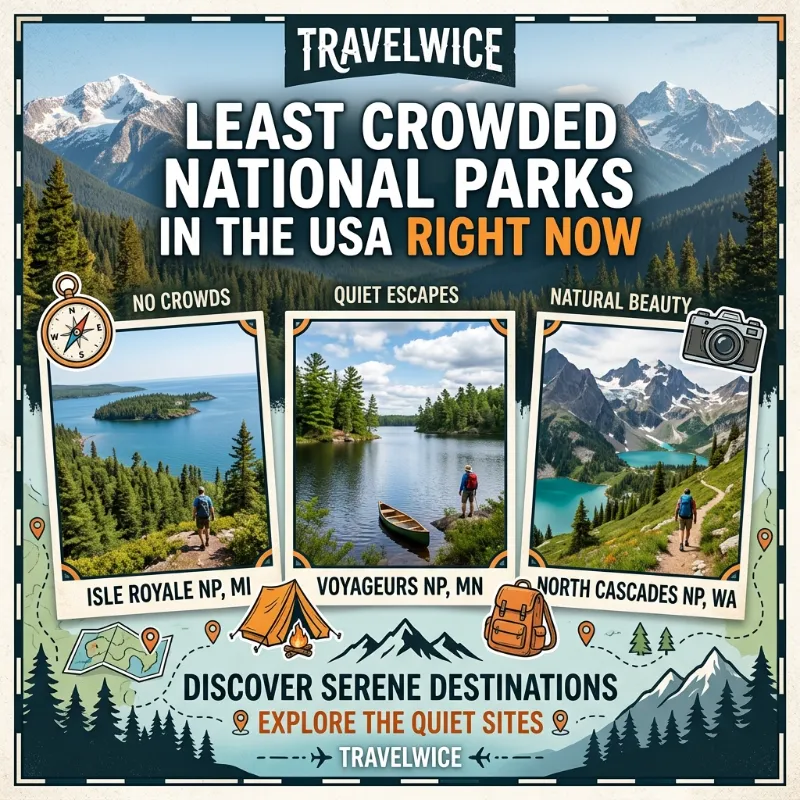
North Cascades sits less than three hours from Seattle, yet it draws only around 30,000 visitors annually, largely because most of the park has no through road. Compare that to nearby Mount Rainier or Olympic, which pull in over a million visitors each, and the gap becomes obvious. Jagged peaks, glacier fed lakes, and quiet alpine trails make this one of the most underrated national parks for 2026, especially for hikers who want Rainier level scenery without the shuttle buses.
The Cascade Pass trail and Diablo Lake overlook are both accessible without a permit, which makes this an easy add on for a Pacific Northwest road trip. Late June through September is the sweet spot, since the high passes stay snow covered earlier in the year.
3. Isle Royale National Park, Michigan
Isle Royale is an island park in Lake Superior, reachable only by boat or seaplane, and that single logistical hurdle keeps annual visits around 25,000. In fact, more people visit Yellowstone in a single busy day than visit Isle Royale in an entire year. Moose and wolves roam freely here, and backcountry campsites rarely feel crowded even in July.
The park closes completely from late October through mid April, so plan your trip for the open season and book the ferry from Michigan or Minnesota well ahead of time, since seats sell out during peak weeks.
4. Great Basin National Park, Nevada
Great Basin gets overlooked constantly, mostly because it sits far from any major city in eastern Nevada. That isolation is exactly why it belongs on any list of national parks without crowds. Bristlecone pines here are among the oldest living trees on Earth, some over 4,000 years old, and Lehman Caves offers guided tours without the long waits you would face at Carlsbad Caverns.
Annual visitation hovers around 140,000, and the park is also one of the best certified Dark Sky locations in the country, making it a favorite for stargazers. May, September, and October bring mild weather and thin crowds, while July and August can get surprisingly warm.
Best National Parks for Hiking Beginners and Pros
5. Congaree National Park, South Carolina
Congaree protects the largest intact old growth bottomland hardwood forest left in the United States, with some trees stretching over 130 feet tall. Despite that, it remains one of the quietest national parks to visit, with roughly 150,000 annual visitors, most of them concentrated on weekends in spring.
The elevated boardwalk trail lets you walk through the floodplain without needing waders, and paddling the Cedar Creek water trail in the early morning is one of the most peaceful experiences in any eastern park. October through April avoids both the mosquitoes and the summer humidity, so it is genuinely the best time to avoid park crowds and bad weather at once.
6. Guadalupe Mountains National Park, Texas
Guadalupe Mountains sits in far west Texas, home to the highest point in the state at Guadalupe Peak, and it stays remarkably empty at around 200,000 visitors a year. Because most travelers heading to Big Bend drive right past it, Guadalupe rarely feels busy even on a clear autumn weekend.
The McKittrick Canyon trail turns brilliant gold and red in late October and early November as bigtooth maples change color, which is easily the best window to visit. Summer here is brutally hot, so plan around it if you can.
7. Dry Tortugas National Park, Florida
Dry Tortugas is about as remote as a national park gets in the lower 48, accessible only by a two hour ferry or seaplane from Key West. That barrier keeps annual numbers around 80,000, and once the daily ferry departs, the historic Fort Jefferson and surrounding coral reefs feel almost private.
Snorkeling here rivals much more expensive Caribbean trips, and December through April brings calmer seas and lower humidity. If you are pairing this with a Florida coastal trip, book the ferry weeks in advance since it does sell out during peak winter months.
8. Black Canyon of the Gunnison National Park, Colorado
Colorado’s national parks tend to get lumped together in people’s minds with Rocky Mountain’s summer traffic jams, but Black Canyon of the Gunnison is a completely different experience. Sheer, narrow cliffs drop over 2,000 feet to the Gunnison River, and the park sees only around 300,000 visitors a year compared to Rocky Mountain’s several million.
The South Rim Drive offers overlooks that rival the Grand Canyon in drama, minus the shuttle buses and crowds at every viewpoint. If you are planning a wider Colorado itinerary, our guide to the best national parks in Colorado covers how to fit this in alongside the bigger names. May and September are ideal, with warm days and thin crowds.
9. Voyageurs National Park, Minnesota
Voyageurs is a water based park along the Canadian border, made up of interconnected lakes rather than hiking trails, which naturally filters out casual visitors. Around 240,000 people visit annually, and a large share of them come specifically for houseboating or fishing rather than sightseeing, keeping the experience calm even in July.
Winter here has become a quiet favorite too, with frozen lake ice caves and northern lights viewing drawing a small but dedicated crowd. If solitude on the water is what you want, this belongs near the top of your list.
Free National Parks in USA: Your 2026 Guide to Parks With No Entrance Fee
10. Wind Cave National Park, South Dakota
Wind Cave sits in the Black Hills, overshadowed almost entirely by nearby Mount Rushmore and Badlands, yet it offers one of the most unique cave systems in the world along with rolling prairie above ground where bison and elk roam freely. Roughly 600,000 people visit each year, which sounds substantial until you realize Badlands pulls in a similar number in a fraction of the space, concentrated along one scenic drive.
Early spring and late fall bring mild weather, active wildlife, and noticeably shorter waits for cave tours.
Underrated National Parks for 2026 Worth Watching
A few parks are gaining quiet attention heading into 2026 without yet seeing the crowd surge that hits places like Arches or Zion. Pinnacles National Park in California, home to talus caves and one of the only wild condor populations left in the country, still sees under 400,000 visitors a year despite sitting just two hours from San Francisco.
Theodore Roosevelt National Park in North Dakota is another one to watch, with dramatic badlands scenery and wild horses roaming the park, yet it remains far less known than its South Dakota neighbor. If California is part of your plans, our guide to the best national parks in California breaks down how Pinnacles compares to the state’s bigger hitters like Yosemite and Joshua Tree.
Best Time to Avoid Park Crowds, Park by Park
Timing matters just as much as the destination itself. Even the quietest parks get noticeably busier on holiday weekends, so a little planning goes a long way.
- Visit desert parks like Guadalupe Mountains and Great Basin in October and November, once summer heat fades but before winter closures begin.
- Head to water and forest parks such as Congaree and Voyageurs in the shoulder months of April, May, September, and October, avoiding both summer bugs and winter access issues.
- Save Alaska parks like Gates of the Arctic for the narrow June through early September window, since that is essentially the only time they are reliably accessible.
- Weekdays consistently beat weekends everywhere on this list, sometimes cutting visitor traffic by more than half according to NPS traffic counter data.
If you tend to travel in the warmer months, our guides to national parks to visit in spring and national parks to visit in fall go deeper into seasonal planning for the wider park system, not just the quiet ones.
How These Parks Compare to the Busiest Names
| Park (Quiet) | Approx. Visitors | Park (Popular Comparison) | Approx. Visitors |
|---|---|---|---|
| Gates of the Arctic | Under 15,000 | Great Smoky Mountains | Over 12 million |
| Isle Royale | Around 25,000 | Grand Canyon | Over 4.5 million |
| North Cascades | Around 30,000 | Mount Rainier | Over 1.8 million |
| Congaree | Around 150,000 | Zion | Over 4.5 million |
| Black Canyon of the Gunnison | Around 300,000 | Rocky Mountain | Over 4 million |
That gap is not a small difference, it is often a hundred times fewer people in the parking lot, on the trail, and at the overlook.
A Few Honest Tips from Experience
I always tell people that the quietest parks reward a bit of extra planning, not extra money. Cell service is often nonexistent in places like Gates of the Arctic or Isle Royale, so download offline maps before you go and tell someone your route.
Gas stations and grocery stores thin out fast once you leave the interstate near Great Basin or Guadalupe Mountains, so fill up and stock supplies a day earlier than you think you need to. Finally, ranger programs at these smaller parks tend to be more personal, since you might be one of only a dozen people on a guided hike rather than one of eighty.
For a broader breakdown of Utah’s parks, which sit closer to the busier end of the spectrum, our guide to the best national parks in Utah is worth a read before you decide how to split your trip between quiet and popular stops.
For deeper research on this exact topic, Renee Roaming’s breakdown of the least crowded national parks is a solid firsthand resource, and FlipFuel’s roundup of America’s least crowded parks covers a few additional angles worth considering. The More Than Just Parks newsletter on summer trip ideas for quiet parks is also written by people who have actually filmed inside these parks for years, so it carries real on the ground insight.
Frequently Asked Questions
What is the least crowded national park in the USA right now? Gates of the Arctic in Alaska consistently ranks as the least visited national park, typically seeing under 15,000 visitors a year due to its lack of roads and remote location.
When is the best time to avoid park crowds nationwide? Shoulder seasons, meaning April to May and September to October, generally offer the lowest crowds combined with reasonable weather across most of the park system.
Are quiet national parks less scenic than popular ones? Not at all. Parks like North Cascades and Black Canyon of the Gunnison rival Yosemite and Rocky Mountain in scenery, they simply lack the marketing and easy road access that drives up visitation.
Do I need a permit to visit these quieter parks? Most do not require a permit for day use, though backcountry camping in places like Isle Royale and Congaree does require a free or low cost permit obtained on site or online.
Is it safe to visit remote parks like Gates of the Arctic alone? It can be done, but it requires serious preparation, since there is no cell service, no marked trails, and rescue can take days. First time visitors often hire a licensed guide service for safety.
Quick Quiz: Test What You Just Learned
- Which national park typically sees under 15,000 visitors a year? a) Zion b) Gates of the Arctic c) Grand Canyon Correct answer: b) Gates of the Arctic
- What makes North Cascades National Park stay so quiet despite being close to Seattle? a) It has no through road b) It charges a high entrance fee c) It is closed most of the year Correct answer: a) It has no through road
- Which season is generally best for visiting desert parks like Guadalupe Mountains and Great Basin? a) Peak summer b) October and November c) Deep winter Correct answer: b) October and November
- How is Isle Royale National Park accessed? a) By car only b) By boat or seaplane c) By train Correct answer: b) By boat or seaplane
- What is Great Basin National Park especially known for besides low crowds? a) Ancient bristlecone pines and dark sky stargazing b) The tallest waterfall in the US c) A major amusement park nearby Correct answer: a) Ancient bristlecone pines and dark sky stargazing
Conclusion
The least crowded national parks in the USA right now prove that you do not need to fight traffic or book a permit six months out to have a genuine wilderness experience. From the roadless expanse of Gates of the Arctic to the quiet boardwalks of Congaree, these ten parks offer the same scale of beauty found in the famous names, just without the noise. Pick one that fits your travel window, plan around the shoulder season tips above, and you will likely walk away with better photos and a much calmer trip than anyone fighting for a parking spot at Zion this summer.
References
- National Park Service, Visitor Use Statistics: https://www.nps.gov/subjects/socialscience/visitor-use-statistics.htm
- National Park Service, official park pages: https://www.nps.gov/index.htm
- Renee Roaming, Least Crowded National Parks: https://www.reneeroaming.com/least-crowded-national-parks/
- FlipFuel, 5 Least Crowded National Parks in America: https://www.flipfuel.co/en-nz/blogs/news/5-least-crowded-national-parks-in-america
- More Than Just Parks, Summer Trip Ideas for America’s Least Crowded Parks: https://morethanjustparks.substack.com/p/summer-trip-ideas-for-americas-least